
Websites
Do car dealers in Nigeria need a website if they're already on Jiji and Instagram?
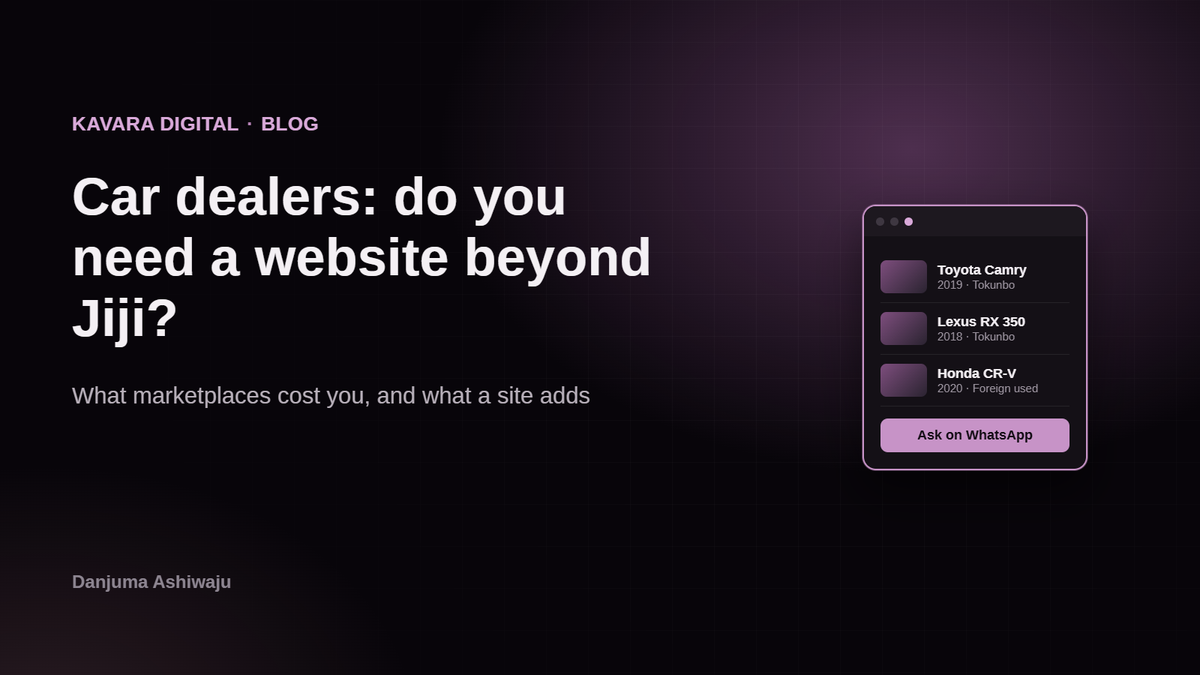
If you sell cars in Nigeria, you're probably already on Jiji, posting on Instagram and running a busy WhatsApp line. So why would you need a website as well?
The short answer: keep the marketplaces, they bring buyers. But a simple website gives those buyers one place to see your full stock and trust you enough to come to your lot, and it gives you something marketplaces don't: buyers who are yours.
Buyers are spending more money, so they research more
Car prices have climbed sharply. Jiji's own data, reported by BusinessDay in 2026, puts entry-level Tokunbo vehicles at close to ₦30 million on average, and the average listing price for imported used cars at about ₦45 million, nearly double two years earlier. The same report notes dealers moving away from physical lots towards online marketplaces.
When someone is spending that much, they don't just send a DM. They compare dealers, check that you're real, and look for reasons to trust you before they visit. That's where a website helps.
What marketplaces cost you
Marketplaces are good at bringing buyers. They also come with costs that don't appear on an invoice:
- Your competitors sit next to your car. A buyer looking at your Camry sees similar Camrys from other dealers on the same page.
- Staying visible costs money. On Jiji, free accounts have ad limits per category, and keeping ads near the top means paying for Boost packages. Pay-per-click promotion through Pro Sales starts from ₦28 a click.
- You don't own the relationship. Your ads, reviews and chat history live on someone else's platform, under their rules.
- Instagram decides who sees your posts. A great car can get almost no views if the algorithm doesn't pick it up.
What a simple inventory website adds
A dealer website doesn't need to be fancy. It needs to do a few things well:
- Your full stock behind one link. Search by brand, model and price range, so a buyer can see everything you have, not just one ad.
- A proper page for each car, with all the photos, the year, mileage, condition, customs status and price (or "call for price").
- A WhatsApp button on every car that opens a chat already saying which car the buyer is asking about, so you know straight away.
- Trust signals: your showroom address and hours, your registration details, inspection options and any financing partners.
- A chance to show up on Google when someone searches for, say, a Lexus RX for sale in Lagos.
My auto dealer template is built for this: featured models, vehicle search by name, brand and price range, full stock listings, showroom hours and one-tap WhatsApp contact. You can try the demo the way a buyer would.
Turn enquiries into a buyer list
The biggest gain isn't the website itself. It's what happens to every enquiry. When a buyer asks about a car, record their name, number and what they wanted. With their permission, you can let them know when a similar car arrives. A buyer who asked about a Highlander last month is your best lead when the next one lands at the port.
I've built software for the vehicle world before. For DriveMe Mobility I built the public site where ride-hailing drivers apply for rent-to-own electric vehicle financing, plus the operator hub that handles their applications, identity checks, credit scores, payouts and repayments. For a dealer, a simple version of that idea goes a long way: a list of enquiries, which car each buyer wanted, and a reminder to follow up.
How to make it work
- Update your stock on the site the same day a car arrives or sells. An out-of-date site loses trust quickly.
- Use the same good photos everywhere, taken in daylight with the full car in frame.
- Put your website link in your Instagram bio, WhatsApp Business profile, WhatsApp status and business cards.
- Set up a free Google Business Profile for your showroom and link it to the site.
- Keep using Jiji and Instagram to find buyers, then send them to your site to see the rest of your stock.
Who doesn't need one
If you sell two or three cars a month from your personal network, a website probably won't change much. Keep using WhatsApp. A website pays off once you hold regular stock, have a showroom or lot, or want buyers from outside your circle.
My Business Website package includes the dealer template and is ₦450,000 at the time of writing. Selling one more car is usually enough to cover it. Book a free 10-minute call and I'll show you how your stock would look on it. If you're comparing offers, read what websites really cost in Nigeria first.